A short history of Lake Naivasha
The lake sits in the Rift Valley at about 1,890 m, and its shores have changed hands and uses many times. Maasai herders used the land for seasonal grazing. British colonial settlers later displaced them and farmed around the water. Over the 20th century the lake became a stop for flying boats, a home for writers and conservationists, a source of geothermal power nearby and a centre for cut flowers.
This page keeps to dated facts and plain language. It does not romanticise the settler years, and it does not offer a heritage trail, because the settler stories have no visitor route. What you can visit today are the lake itself, the house at Elsamere and the landscape. Boat rides on the water, described in our Lake Naivasha boat ride guide, are the easiest way to see the shoreline the history is about.
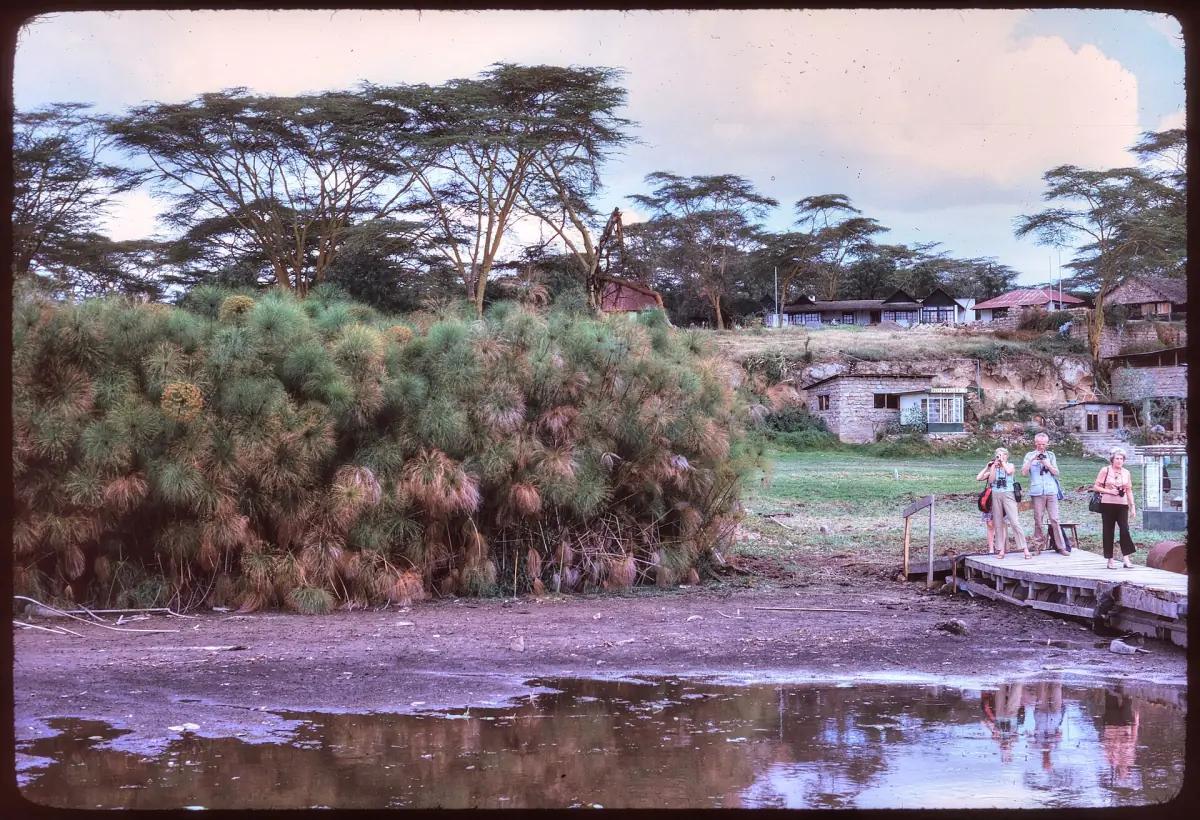
Key dates at a glance
Dates, events and what is left to see.
| Date | What happened | What you can see today |
|---|---|---|
| 1937 to 1950 | The lake was a flying-boat stop on the Southampton to South Africa route | – |
| 1942 | Italian prisoners of war built a roadside chapel at Mai Mahiu | The chapel by the road |
| 1960 | Joy Adamson's book Born Free appeared | The house at Elsamere |
| 1966 | The Born Free film followed | – |
| 1981 to 1985 | First geothermal units at Olkaria I started up | Steam fields near Hell's Gate |
| 1995 | The lake was designated under the Ramsar Convention, covering 30,000 ha | The wetland and its birds |
| 2010 to 2026 | The water level rose by up to about 7 m | Higher water along the shore |
For most visitors, the simplest way to connect these dates is a boat ride on the lake, a visit to Elsamere and a stop at the chapel on the road from Nairobi.
The name and the first people of the lake
The lake's name comes from the Maa language. Common readings are "that which heaves" or "that which rises". An older form, Nai'posha, is translated as "rough water". No single translation is final.
Maasai herders brought cattle here for seasonal grazing. British colonial settlers arrived later and pushed the Maasai off the land. The colonial period around the lake includes what is often called the Happy Valley era. That is a chapter of colonial history, not a place you can tour, and no access route is set up for visitors.
Our pick: a look at the flower trade
The rose farm visit shows the flower business that grew up around the lake, with Fair Trade and how the roses are sold.
Hand-picked tours, booked through GetYourGuide. Prices are indicative starting prices in US dollars (as of October 2026). Tap a tour for live availability and the current price in your currency.
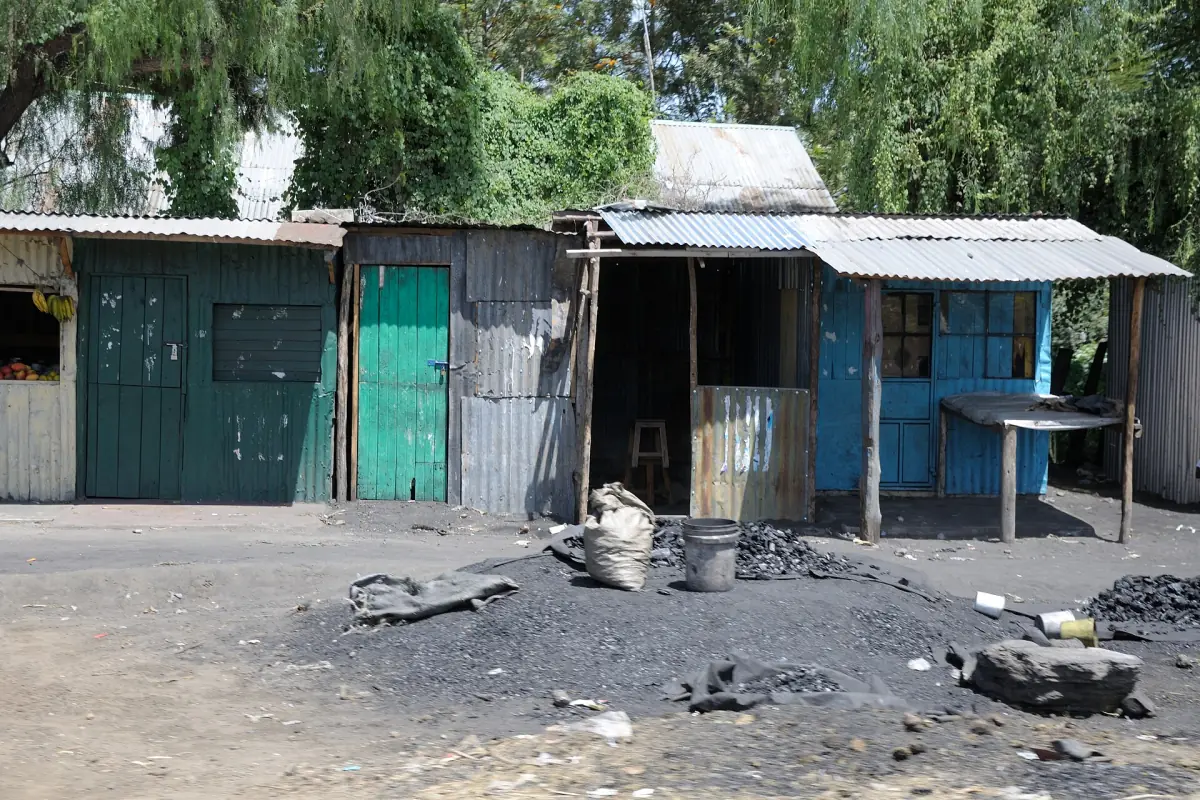
Naivasha tours and day trips
See the shoreline in person: boat rides, Crescent Island walks and day trips from Nairobi, with live prices and availability.
Flying boats, Joy Adamson and Elsamere
Two 20th-century stories left traces you can still follow.
The flying-boat years
From 1937 to 1950, the lake served as a stopover for flying boats on the Southampton to South Africa route. Worth keeping in mind on a calm morning on the water.
Born Free and the house at Elsamere
Joy Adamson's book Born Free was published in 1960 and the film followed in 1966. Elsamere on Lake Naivasha was her house and is now part of the Elsa Conservation Trust, which supports a centre for education in sustainability. Elsa the lioness was released in Meru, not at Naivasha, and died in 1961. Visit Elsamere for the house, the film about Joy and tea in the garden. Our Elsamere guide has the details.
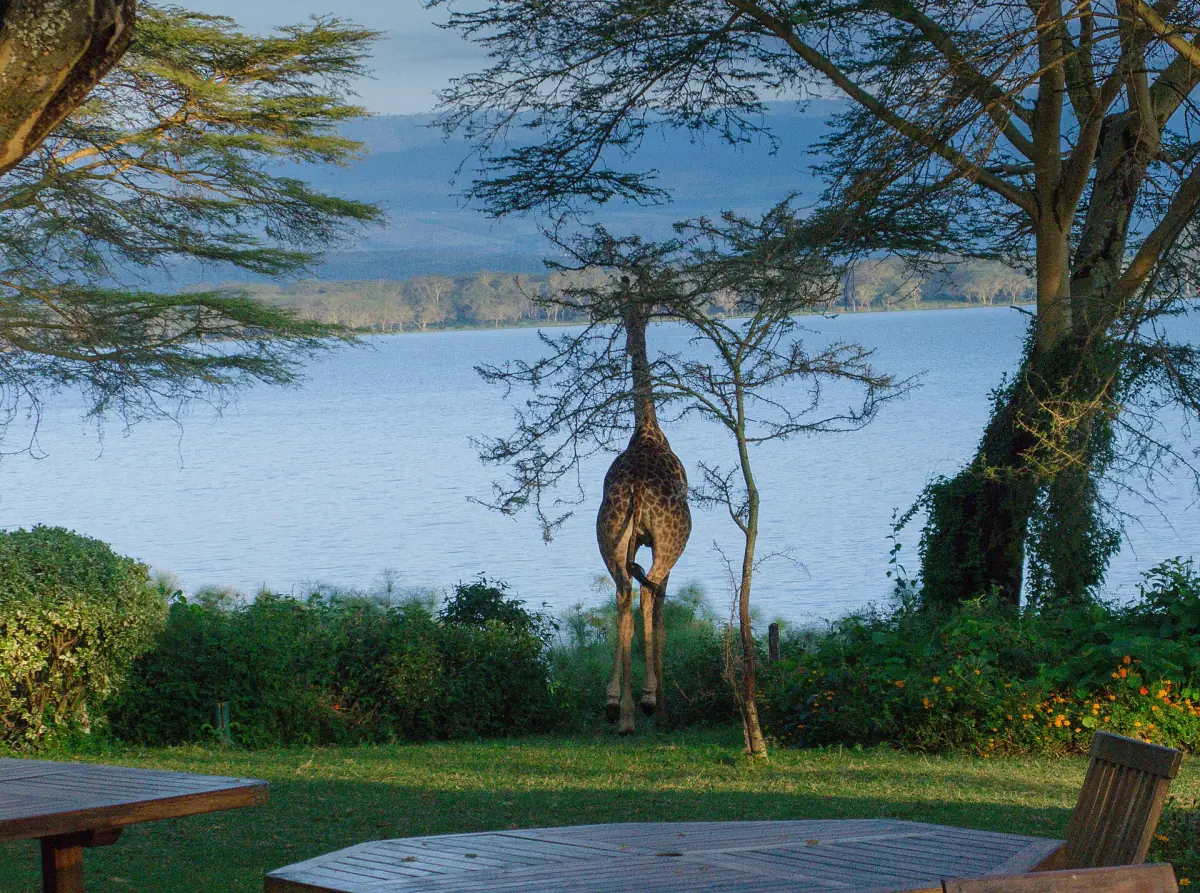
The garden at Elsamere reaches toward the lake, and in the picture a giraffe stands among its trees. There is no guarantee of any wildlife sighting on a given day.
Naivasha flower farms and the lake
Flower farms grow cut flowers, among them roses, on the land around the lake. They are part of the local economy, and they use irrigation water. Water use and pollution are part of a long-running debate about how to share and protect the lake.
As a visitor, do not expect to walk onto a flower farm. Do not count on dropping in; ask the farm or a tour operator about arrangements. If you want to learn about the sector, ask a guide on your boat or at Elsamere how the farms and the lake affect each other.
Fishing is another economic use of the lake. That does not mean visitors may fish without arrangement, so ask locally before you try.
Geothermal power, a protected wetland and a rising lake
South of the lake, KenGen started the first unit of Olkaria I in June 1981. More units followed in 1982 and 1985. The geothermal fields lie near Hell's Gate National Park, and the history of Hell's Gate covers the park side of the story.
In 1995 the lake became a Ramsar wetland of international importance, with an area of 30,000 ha. That figure describes the protected area, not today's open water. The surface has changed a lot. Between January 2010 and January 2026 the level rose by up to about 7 m and the water area grew by roughly 40 percent, around 50 square kilometres. Shores and buildings flooded as a result, and the lake is not drying up.
For what that means for your visit, read about the Naivasha weather and seasons, or the road to the valley edge at Mai Mahiu.
Lake Naivasha history: frequently asked questions
What does the name Naivasha mean?
It comes from the Maa language. Common readings are "that which heaves" or "that which rises", and an older form, Nai'posha, is translated as "rough water". There is no single agreed translation.
Who lived at Lake Naivasha before the settlers?
Maasai herders used the land for seasonal grazing. British colonial settlers later displaced them and took up farms around the lake.
Did Elsa the lioness live at Naivasha?
No. Elsa was released in Meru and died in 1961. Elsamere was Joy Adamson's house on Lake Naivasha, and it is now run by the Elsa Conservation Trust.
Can I visit a flower farm?
Do not count on it. Farm visits depend on arrangement with the farm or a tour operator, so ask before you plan one.
Is Lake Naivasha shrinking?
No. Between 2010 and 2026 the level rose by up to about 7 m and the lake area grew by around 40 percent. Water use and pollution remain concerns.
Is this an official history site of Lake Naivasha?
No. This is an independent travel guide. It is not run by Nakuru County, a museum, a conservation trust or any operator.