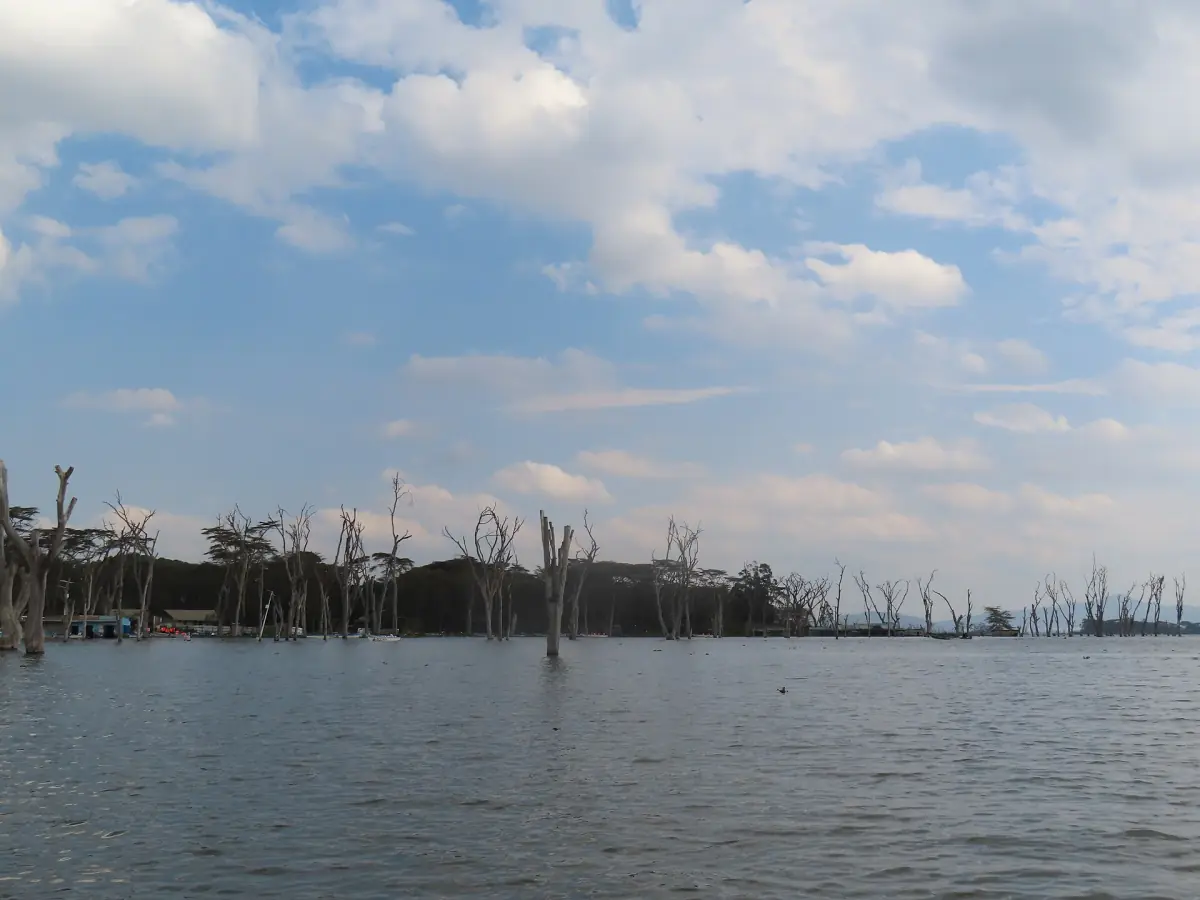
Naivasha weather and the two rainy seasons
The lake lies in the Rift Valley at about 1,890 m above sea level. Rain falls in two seasons. The long rains run from March to May, and the short rains from October to December. Parts of the Naivasha area are drier than others, so the pattern varies from place to place. No month promises dry paths, calm water or a quiet shore.
This page explains the seasons and what they mean for your plans, without monthly numbers. If your main plan is a boat on the water, our guide to the Lake Naivasha boat ride shows how a trip works and what to ask before you pay.
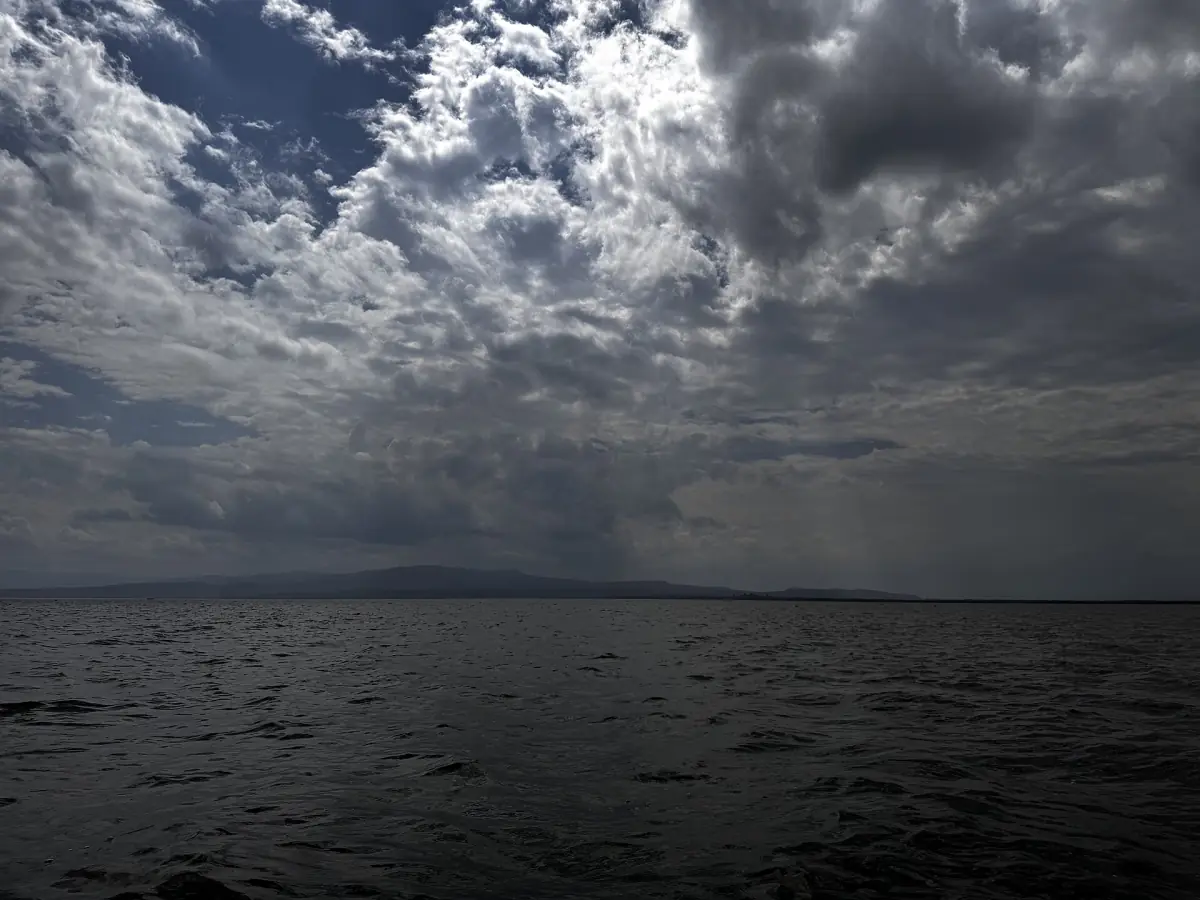
Seasons at a glance
A rough guide, not a forecast.
| Period | What to expect | Plan around it |
|---|---|---|
| March to May | Long rains. Showers and cloud can vary across the area. | Carry rain protection. Check the road at Mai Mahiu and the shore before you travel. |
| June to September | Outside the two rainy seasons. Not a guarantee of dry weather. | Bring sun protection and water for hikes and boats. |
| October to December | Short rains. | Ask about flooded paths and jetties before you book a boat or a lodge. |
| January and February | Outside the two rainy seasons. No guarantee of dry days. | Start early and keep a layer for the evening. |
For most visitors who want boats, walks and a hike in one trip, the months outside the two rainy seasons are the easiest to plan. Treat that as a tendency, not a promise.
What the altitude means for packing
At around 1,890 m the mornings and evenings can feel cool, even when midday sun is strong. Pack a warm layer for early boat departures and for the evening. Add a hat, sun cream and a water bottle for an open boat and for the crater rim of Mount Longonot.
Rain gear helps in any season. A light waterproof is enough for most trips. Shoes with grip are worth packing for wet paths and for the Longonot trail.
Our pick: a day trip planned around the forecast
A full day with hotel pickup and a guide leaves the driving and the timing to someone else, which helps when the rain decides the schedule.
Hand-picked tours, booked through Viator. Prices are indicative starting prices in US dollars (as of October 2026). Tap a tour for live availability and the current price in your currency.
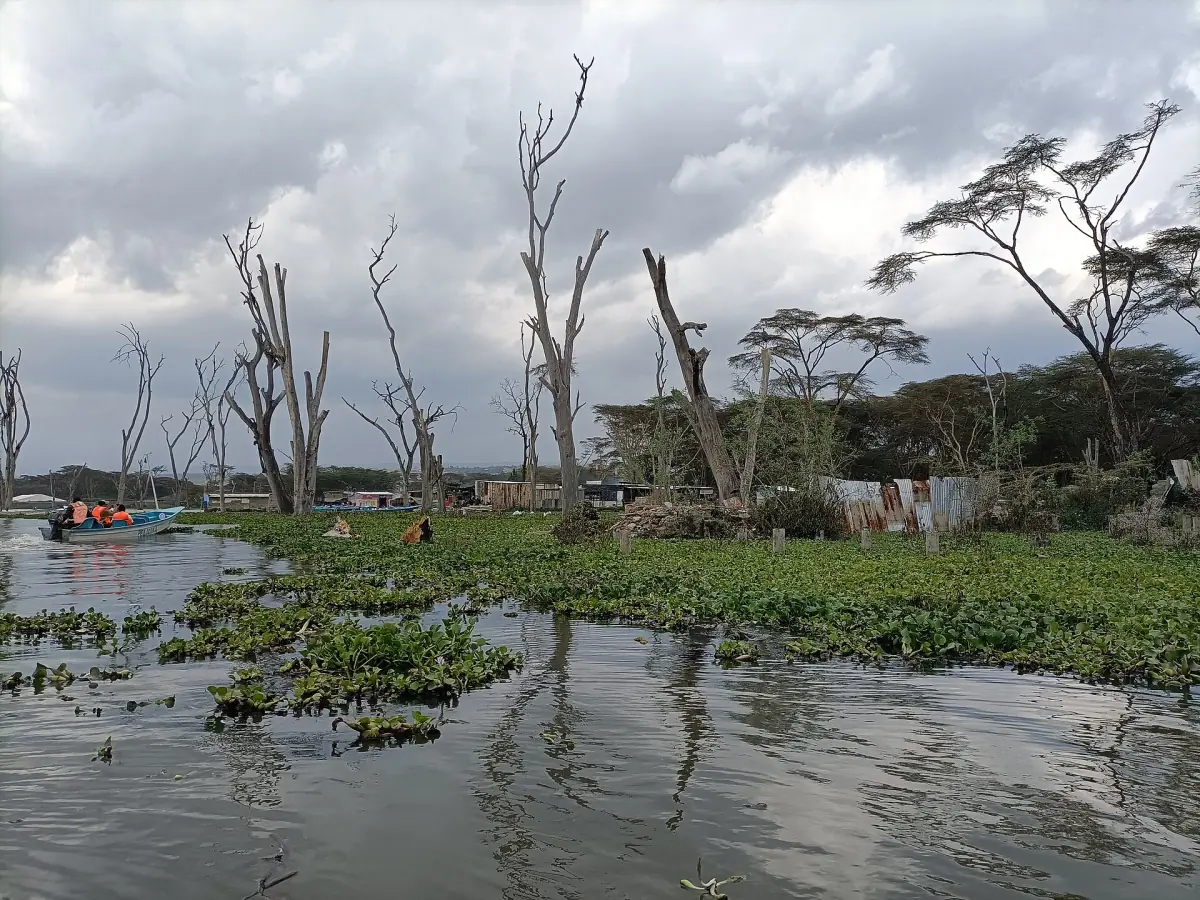
Naivasha tours and day trips
Boat rides, Crescent Island walks, Mount Longonot hikes and day trips from Nairobi, with live prices and availability.
Best time to visit Naivasha by activity
Opening hours matter as much as the season.
Boat rides and Crescent Island
Crescent Island opens at 8:30 a.m., with last entry at 4:30 p.m. and closing at 5:45 p.m. Be back on the boat before closing, because hippos are on land by then. Morning is the practical choice. See the Crescent Island guide and the hippo safety notes.
Mount Longonot
The park is open from 6 a.m. to 6 p.m. An early start gives you cooler hiking time and daylight to finish. Plan roughly 4 to 7 hours for the crater hike, because times vary. Details are in the Mount Longonot hiking guide.
Hell's Gate and gorges
Rain can raise flash flood risk in narrow gorges. The Hell's Gate weather guide covers the park's dry seasons and flood risk.
Sunset and photography
Evenings at the water can be beautiful, but plan your return carefully. Do not walk along the shore alone after dark. Hippos come ashore.
Sunset over the lake reaches across the water and the acacias. For a safe viewing spot, ask your lodge where the shore is accessible and well lit.
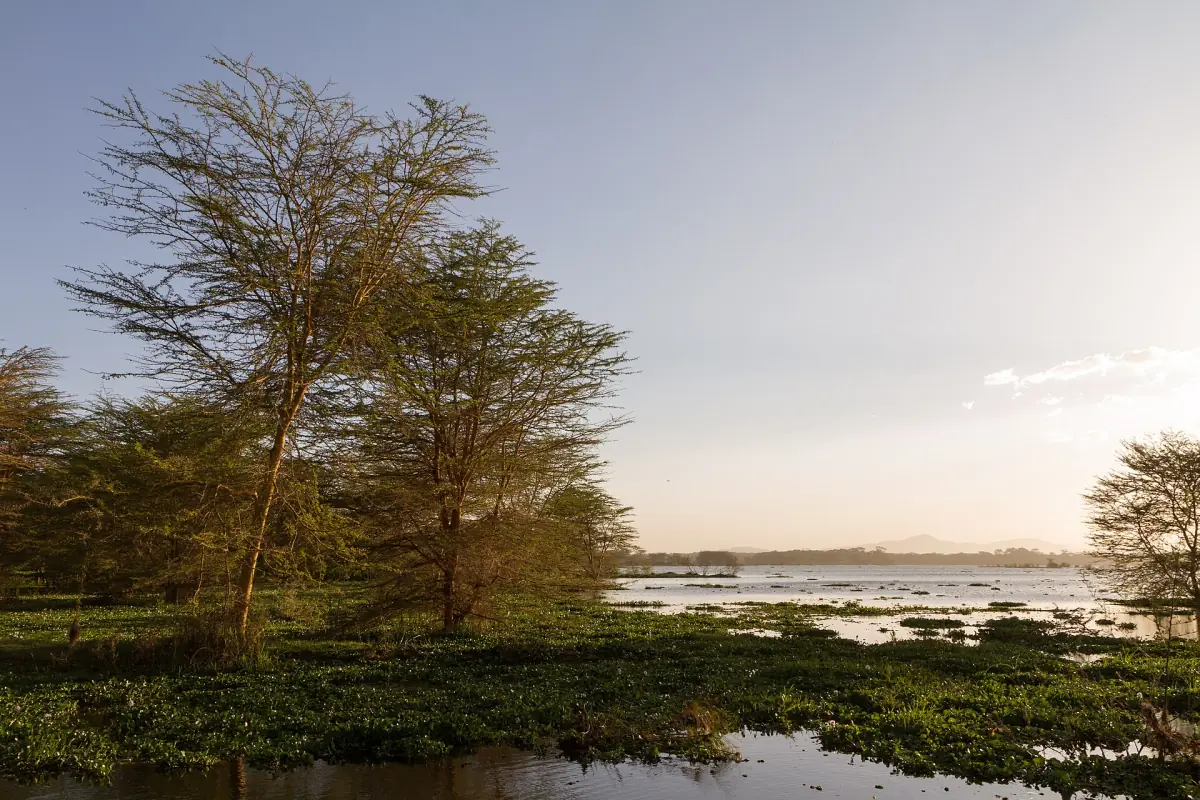
The lake level and your timing
The lake has risen. Between January 2010 and January 2026 the level climbed by up to about 7 m and the water area grew by roughly 40 percent. Flooded shores, buildings and trees are the result. The lake is not drying up.
In rainy periods, low-lying neighbourhoods near the lake and around Mai Mahiu can face flood warnings. Crescent Island is an island or a peninsula depending on the water level, and you reach it by boat. A "lake view" on a booking page does not prove that you can walk to the water, so ask whether the shore, the garden and the jetty are usable now. Our Naivasha hotels guide shows how to ask. For the longer view, see the lake's history.
Avoid night driving, which matters more on wet roads.
Naivasha weather: frequently asked questions
When is the rainy season in Naivasha?
The long rains run from March to May and the short rains from October to December. Rainfall varies across the area, and some parts are drier than others.
What is the best month to visit Naivasha?
It depends on the activity. Months outside the two rainy seasons are the easiest for hikes and boat trips, but no month guarantees dry weather or calm water.
Is Naivasha cold at night?
At about 1,890 m, mornings and evenings can feel cool. Pack a warm layer, especially for early boat departures.
Does rain cancel boat rides?
That depends on the operator and the conditions on the day. Ask when you book and keep a rain jacket in your bag.
Can I hike Mount Longonot in the rain?
The park is open from 6 a.m. to 6 p.m. Wet paths are harder going, so take shoes with grip and check conditions at the gate before you set off.
Is this an official Naivasha weather service?
No. This is an independent travel guide. It is not run by a meteorological service, Nakuru County, the Kenya Wildlife Service or any operator, and it is not a forecast.